
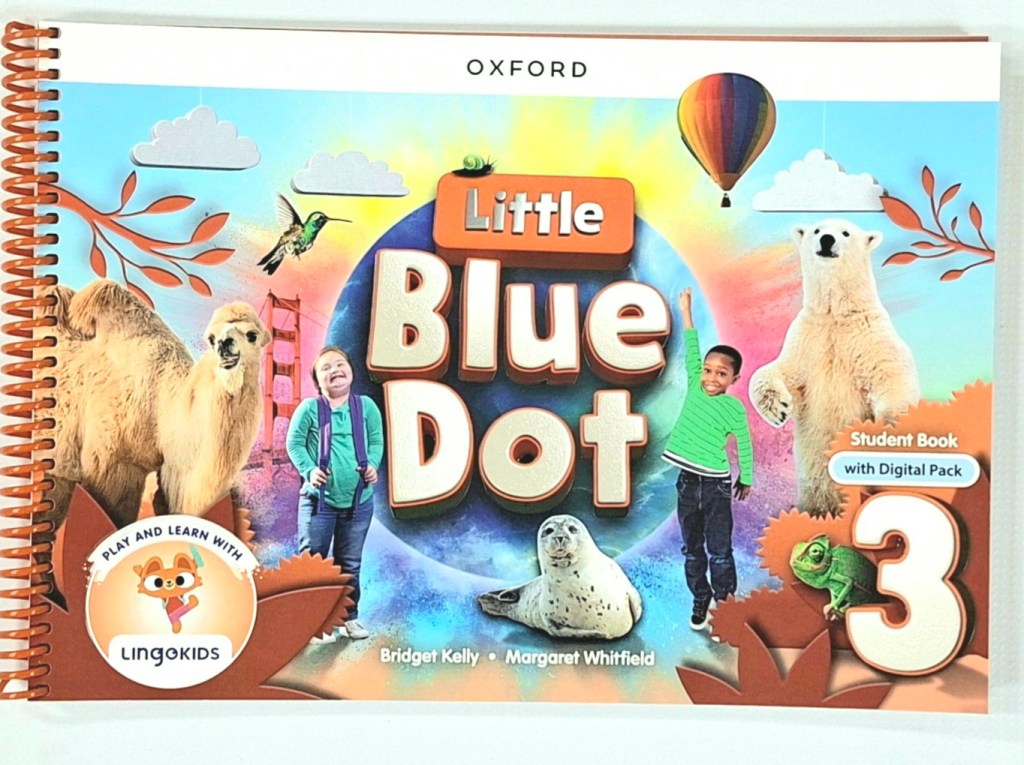
Little Blue Dot Course Overview
Little Blue Dot is an innovative three-level preschool English course designed for children aged 3–6. It uses a “learning with concepts” methodology to introduce big ideas — such as friendship, environment, community, and feelings — while also building foundational English skills.
This approach helps young learners explore language and life skills in a meaningful, age-appropriate way, making it ideal for kindergartens, nurseries, and early-years language programs.
Who This Course Is For
Age Group and Level
- Age range: 3–6 years old — suitable for preschool and early-years classes.
- Level: Pre-A1 / Beginner — designed for children with little or no prior English exposure.
Teaching Contexts
Little Blue Dot works in:
- Kindergartens and nursery schools
- Early-years English classes in language schools
- Preschool programs (public or private)
- Mixed-ability or mixed-age early childhood groups
Its flexible structure adapts to different class sizes and schedules, making it a good choice for diverse early childhood settings.
What the Course Includes
Learner Materials
Little Blue Dot Level 1 provides a complete resource set for young learners:
- Student’s Book with stories, songs, activities, and concept-based themes
- Activity Book for extra practice and reinforcement
- Digital Pack (app / online resources) for songs, interactive activities, and audio support
Teacher Resources & Support
- Teacher’s Book with detailed lesson plans and guidance for concept-based teaching
- Classroom resources pack (flashcards, visuals) to support multisensory learning and early-years needs
These materials give teachers clear structure while allowing flexibility — a big advantage for early-years teaching.
Teaching Approach & Methodology
Concept-Based Learning
Instead of isolated vocabulary or themes, Little Blue Dot uses big, meaningful ideas (such as friendship, nature, community) to help children connect language to life — which supports deeper understanding and long-term retention.
Multi-Sensory & Playful Activities
The course combines stories, songs, visuals, interactive tasks, and digital resources. Young learners benefit from varied input and engaging tasks, matching how children naturally learn — through play and exploration.
Early-Years Friendly Structure
Lessons focus on oral language, listening, basic vocabulary, and conceptual awareness — without pressure for reading or writing, which suits ages 3–6 and helps build confidence and enjoyment.
Holistic Development & Life Skills
Beyond English, Little Blue Dot encourages social skills, emotional awareness, curiosity about the world, and values such as respect and cooperation — making it a holistic pre-primary solution.
Why Little Blue Dot Is a Great Choice for Pre-Primary
- Tailored for very young learners with no prior English — gentle, age-appropriate, and concept-based
- Combines language learning with life skills and conceptual thinking
- Provides structured teacher support and flexibility for different classroom contexts
- Encourages holistic development: cognitive, social, emotional, and linguistic
- Includes both print and digital resources — great for modern classrooms and mixed learning environments
How We Can Support Your School
If you choose Little Blue Dot Level 1 for your preschool or early-years program, we can help you:
- Select the right materials pack (student books, activity books, digital resources)
- Integrate the course into your curriculum alongside other courses or books
- Plan lessons and class structure for young learners
- Provide advice for mixed-ability or mixed-age groups
- Offer teacher-support guidance to maximize the course potential
Related Early-Years ELT Resources
You might also like other pre-primary courses and materials in our catalogue, such as:
- Story-based readers and picture books suitable for preschool learners
- Phonics and early-literacy support materials
- Songs, posters, flashcards, and activity sets for early-years classes
[Internal link placeholder: View all Pre-Primary ELT Materials]
Connected Guides & Events
To support effective implementation of Little Blue Dot, we recommend also exploring:
- 2025 Teaching Guide — for methodology and early-years teaching advice
- Upcoming Teacher Training & Workshops (Events Page)
These resources help build a complete and well-rounded early-years English program.
Frequently Asked Questions (FAQ)
Is Little Blue Dot suitable for children who have never studied English?
Yes — the course is designed for absolute beginners, with simple language, concept-driven content, and child-appropriate themes and activities.
Does the course support children’s social and emotional development, or focus only on language?
Little Blue Dot goes beyond language: it emphasizes values, social interaction, communication, conceptual understanding, creativity, and holistic development.
Can it work with mixed-ability or mixed-age preschool groups?
Yes — its flexible, activity-based structure and variety of resources allow teachers to adapt lessons to different needs and learner levels.
Does the course include digital and home learning materials?
Yes — the Digital Pack (app/online) includes songs, interactive activities, and audio support — useful for both classroom and home use.
Why choose concept-based learning over traditional subject-based English courses for preschoolers?
Because it connects language to real life, encourages thinking, values, and awareness, and matches how young children naturally explore and learn — through curiosity, play, and meaningful context.
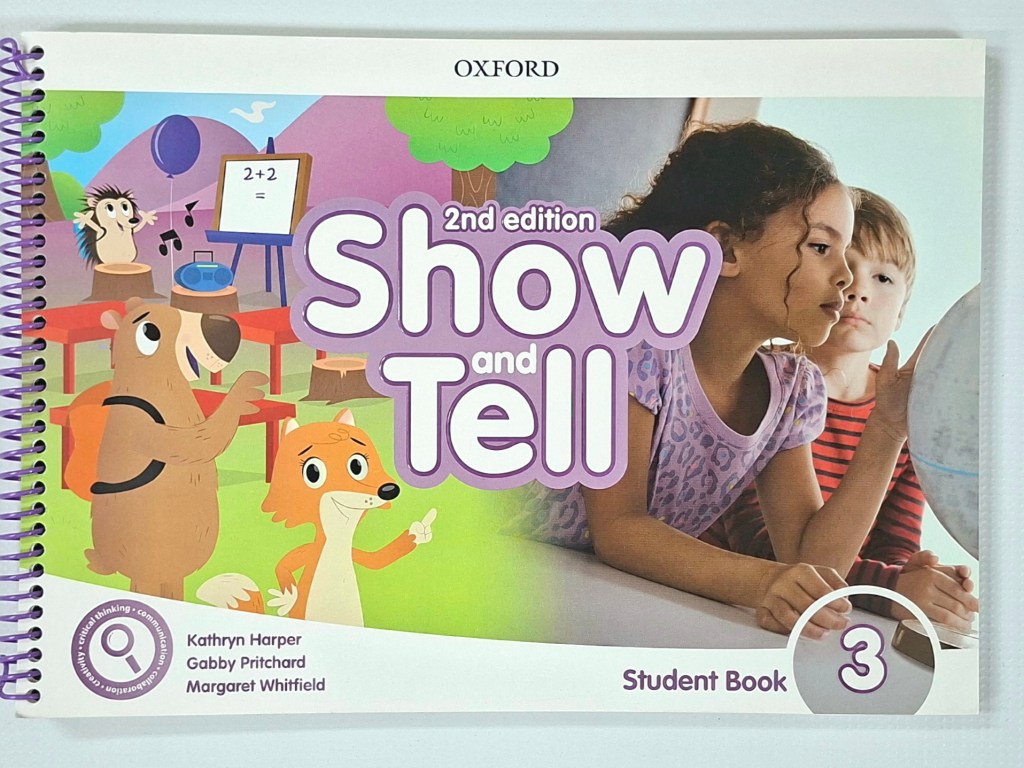
Course Overview
Show and Tell 2nd Edition is a three-level pre-primary English course for children aged 3–6. It builds language naturally through stories, songs, hands-on projects, and everyday classroom communication. The course uses a “think, learn, create” approach to help children develop English, thinking skills, and social-emotional awareness in a balanced, age-appropriate way.
It provides clear routines for teachers, rich multimedia support, and a gentle path into early literacy — making it suitable for kindergartens, preschools, nurseries, and language centers.
Who This Course Is For
Age Group and Level
- Age: 3–6 years old
- Level: Pre-A1 / Beginner — ideal for children with little or no English.
Teaching Contexts
Show and Tell is suitable for:
- Preschool and kindergarten programs
- Early-years ESL / EFL classes
- Language schools
- Mixed-ability or mixed-age groups
Its structure and variety of resources make it flexible for different class sizes and timetables.
What the Course Includes
Learner Materials
- Student Book with stories, songs, vocabulary, and age-appropriate activities
- Activity Book for extra practice and consolidation
- Project work activities to build creativity and communication skills
- Songs and videos that support listening and oral language
Teacher & Classroom Resources
- Teacher’s Book with step-by-step lesson plans
- Classroom Presentation Tool (digital)
- Flashcards and posters
- Audio, video, and interactive tools
- Assessment resources
These materials support smooth lesson planning and delivery, even for new early-years teachers.
Teaching Approach & Methodology
Think–Learn–Create Framework
This simple and effective cycle encourages children to:
- Think: explore ideas and connect new concepts
- Learn: build vocabulary and language through stories and tasks
- Create: express understanding through art, movement, role-play, or simple projects
Story-Based and Play-Based Learning
Stories and hands-on activities give context to language, making learning meaningful and enjoyable for young children.
Early Literacy and Phonics Support
Show and Tell gradually introduces letters, sounds, and pre-reading skills through visuals, songs, and repetition, without pressure for early writing.
Social and Emotional Learning
The course includes age-appropriate opportunities for children to express feelings, collaborate, make choices, and develop confidence in a supportive classroom environment.
Why Teachers Choose Show and Tell
- Simple routines and clear structure make teaching easier
- Strong balance of English, thinking skills, creativity, and values
- Wide range of classroom materials and multimedia support
- Includes project work that encourages communication and confidence
- Adaptable for different teaching contexts and mixed-ability classes
- Smooth transition to primary-level ELT programs
How We Can Support Your School
If you plan to use Show and Tell 2nd Edition in your kindergarten or preschool program, we can help you:
- Choose the right levels and components
- Plan how to integrate the course into your curriculum
- Combine Show and Tell with phonics or early-readers resources
- Offer teacher training in early-years methodology and activity-based lessons
Related Pre-Primary ELT Resources
You may also want to explore:
- Other pre-primary courses from Oxford and Cambridge
- Phonics and early-literacy supplements
- Storybooks and readers for young learners
- Songs, flashcards, and classroom resource packs
[Internal link placeholder: View all Pre-Primary ELT Materials]
Connected Guides & Events
To support classroom implementation and long-term planning, we recommend:
- 2025 Teaching Guide – Early Years & Pre-Primary Methods
- Workshops and Training Events for Kindergarten Teachers
These strengthen your early-years English program through methodology and teacher support.
Frequently Asked Questions (FAQ)
Is Show and Tell suitable for complete beginners?
Yes. Level 1 starts with simple language exposure, songs, stories, and classroom routines suitable for children with no prior English.
Does the course include digital tools?
Yes. The Classroom Presentation Tool, songs, videos, and interactive tasks help keep young learners engaged.
Does it work with mixed-ability or mixed-age groups?
Yes. The flexible structure, visual support, and hands-on tasks make it suitable for mixed groups.
What makes the Think–Learn–Create cycle effective?
It allows children to explore ideas, build language, and then express their understanding creatively — matching how preschool learners naturally learn.
Does Show and Tell help prepare learners for primary English courses?
Yes. It develops vocabulary, oral communication, listening skills, and early phonics awareness — giving children a strong start before joining more structured primary-level programs.
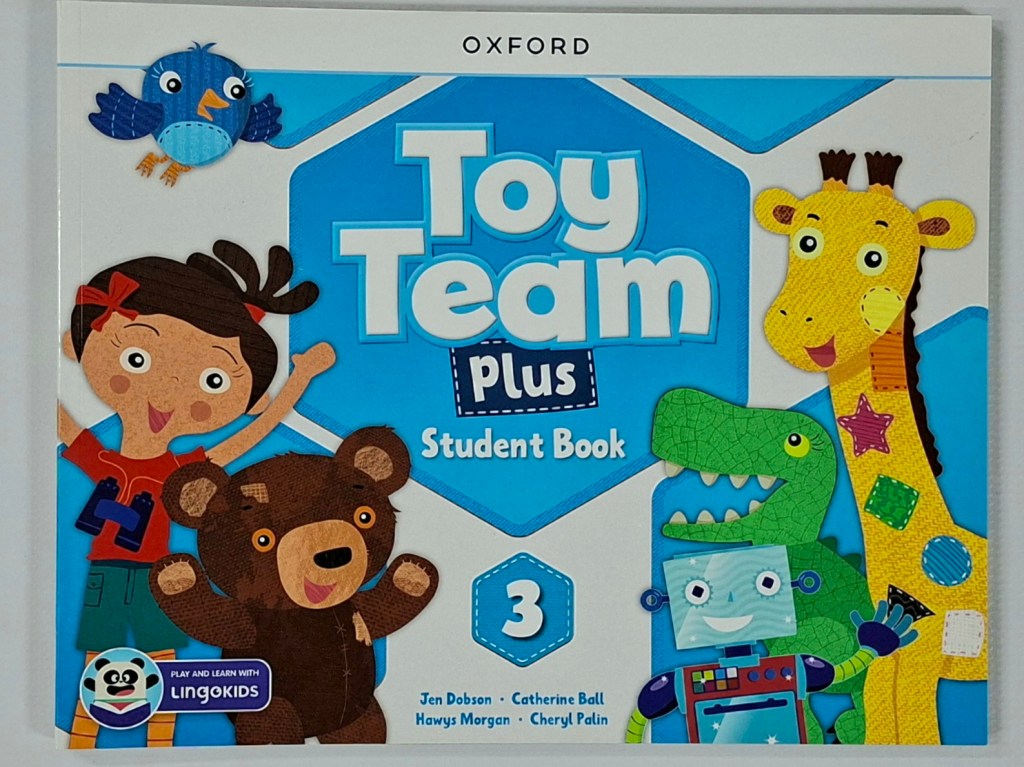
Course Overview
Toy Team is a cheerful and playful pre-school English programme for children aged 3–6. The course uses a team of friendly toy-characters, fun stories, songs, crafts, and collaborative activities — introducing English in a natural, playful context while also promoting friendship, inclusivity, and social skills.
Each lesson is designed to be engaging and accessible, with a focus on early communication, listening, vocabulary, social-emotional learning, and school readiness. Toy Team is ideal for nurseries, kindergartens, language centers, and early-years classes aiming to start English learning with joy and meaning.
Who This Course Is For
Age Group and Level
- Age: 3–6 years old — suitable for preschoolers and early-years learners.
- Level: Pre-A1 / Beginner English — designed for children with little to no prior English exposure.
Teaching Contexts
Toy Team works well in:
- Nurseries and kindergartens
- Preschool English classes at language centers
- Mixed-ability or mixed-age early-years groups
- Programs that aim for holistic development: language + life skills + values
Its flexible and playful structure allows adaptation to different class sizes, schedules, and learning environments — whether formal preschool or play-based early-years settings.
What the Course Includes
Learner Materials & Content
- Student’s Book with stories, dialogue, songs, rhymes, and picture-based tasks.
- Activity Book — supporting workbook tasks, crafts, drawing, and age-appropriate games.
- Songs and chants — for listening, pronunciation, movement and fun language exposure.
- Crafts, games, and hands-on activities — helping motor-skills development, play-based learning, social interaction.
- Flashcards, visual aids, and classroom resources — to support vocabulary retention, visual learning, and interactive lessons.
Teacher & Digital Support
- Teacher’s Book with lesson plans, guidelines, and suggestions for differentiated learning, making it easy even for teachers new to early-years English.
- Digital Pack including songs, animations/stories, interactive resources — useful for classroom and home-learning reinforcement.
- Support for social-emotional and values-based lessons tied into language learning (friendship, inclusivity, collaboration) — adding extra dimension beyond language.
This makes Toy Team a well-rounded early-years English option — balancing language, creativity, social-emotional learning, and play.
Teaching Approach & Methodology
Play-based, Child-centred Learning
Lessons are built around play, stories, movement, crafts, songs — matching how preschoolers learn best. Rather than formal drills, Toy Team uses natural interaction and fun to introduce vocabulary and English routines.
Character & Values-Driven Storytelling
The “Toy Team” characters guide learners through daily adventures that include friendly themes like sharing, friendship, curiosity, and teamwork. This helps make English meaningful and connects language learning to life values.
Multi-Sensory Input and Active Learning
Using visuals, songs, crafts, and interactive activities helps cater to different learning styles. For very young learners, multi-sensory engagement supports attention, memory, and long-term retention.
Early Communication Focus (Listening & Speaking)
At this age level, the emphasis is on listening, speaking, familiarisation with sound patterns, vocabulary recognition — without pressure for reading or writing. Toy Team respects that developmental stage.
Social & Emotional Development through Language & Play
Through collaborative activities and values-based stories, children learn respect, cooperation, sharing, empathy — on top of language. This supports holistic development, especially in early-years settings.
Why Toy Team Is a Great Choice for Preschool English
- Designed for very young learners — content, pace, and activities suit ages 3–6
- Combines language learning with social-emotional development, creativity, and values
- Rich, flexible resources — books, audio, video, crafts, songs, flashcards — give teachers and schools many teaching options
- Supports mixed-ability / mixed-age classes — adaptable and forgiving curriculum
- Encourages play, engagement, and fun — making English learning a positive, enjoyable experience for kids and teachers
- Foundation for later English learning — builds confidence, basic vocabulary, listening & speaking readiness before formal schooling
How We Can Support Your Early-Years Program
If you choose Toy Team for your preschool or early-years program, we can help by:
- Selecting the right level and materials pack (Student Book, Activity Book, Digital Pack)
- Advising on integrating Toy Team into your curriculum (schedule, extra materials, class setup)
- Offering teacher support — lesson planning advice, activity ideas, mixed-ability management
- Providing guidance for combining Toy Team with other courses or follow-up materials
Related Pre-Primary / Kindergarten ELT Resources
You might also want to explore:
- Other pre-primary courses in our catalogue (Cambridge, OUP, etc.)
- Storybooks and picture-books for preschool learners
- Flashcards, phonics & early-literacy support materials
- Songs, games and activity-based resources for early-years classrooms
[Internal link placeholder: View all Pre-Primary ELT Materials]
Connected Guides & Teacher Support
To maximize the benefits of Toy Team, we recommend checking:
- 2025 Teaching Guide: Early Years & Pre-Primary Methods
- Upcoming Teacher Workshops & Early-Years Training Sessions
These resources help build a comprehensive early-years English program and support teacher development.
Frequently Asked Questions (FAQ)
Is Toy Team suitable for children who have never studied English?
Yes. The course is designed for absolute beginners — preschoolers with no prior English exposure. The material starts from basics, using play, stories, songs, and visual context.
Does Toy Team include digital materials or home-learning resources?
Yes. Through the digital pack and optional integration with the Lingokids™ app, students can access songs, videos, interactive exercises — useful for both classroom and home reinforcement.
Can this course work in mixed-ability or mixed-age preschool classes?
Yes. The flexible and playful structure, combined with differentiated activities, makes Toy Team adaptable to a variety of class compositions and learner levels.
Does the programme support social and emotional development alongside English?
Yes. Through stories, collaborative activities, and value-based themes (friendship, inclusivity, sharing), Toy Team helps nurture social skills, empathy, cooperation — alongside language.
Is Toy Team a good foundation before primary-level English courses?
Yes. It builds listening, speaking, vocabulary, social skills, classroom routines — preparing children for structured learning when they move to primary English courses.
Course Overview
First Friends 2nd Edition is a two-level pre-primary English course designed for very young learners (ages 3–6). It builds foundational English skills — vocabulary, phonics, listening, speaking — while integrating social values and everyday communication in a friendly and age-appropriate context.
With a clear, easy-to-follow structure and rich resources, the course offers a gentle introduction to English, suitable for nurseries, kindergartens, and preschool settings.
Who This Course Is For
Age Group and Level
- Age: 3–6 years old — ideal for preschool and early-years children.
- Level: Pre-A1 / Beginner English — appropriate for children with little or no prior English exposure.
Teaching Contexts
First Friends works well in:
- Kindergartens, nurseries, and preschool settings
- Early-years English classes in language schools
- Mixed-ability or mixed-age early-years groups
The course’s flexibility and gentle pace make it suitable for different classroom sizes, schedules, and learning environments.
What the Course Includes
Learner Materials & Content
- Student’s Book with stories, songs, vocabulary, and simple dialogues covering everyday topics (family, toys, classroom language, colors, shapes, greetings).
- Activity Book for practice, revision, drawing & crafts — reinforcing vocabulary and early communication skills.
- Phonics and number awareness integrated into songs and simple tasks — building readiness for reading and basic numeracy.
Teacher & Support Resources
- Teacher’s Book offering structured lesson plans, guides, and classroom management tips — helpful especially for teachers new to early-years English.
- Multi-ROM (digital) pack: audio, songs, interactive media — useful for listening practice, home-school reinforcement, and engaging mixed-ability classes.
These materials combine to make a complete early-years English course — language + values + life skills + fun.
Teaching Approach & Methodology
Gentle, Child-Centred Introduction
First Friends uses simple language, repetitive routines, songs, visual supports, and friendly contexts (home, toys, classroom) to introduce English in a way that matches children’s developmental stage.
Phonics, Vocabulary & Basic Structures
The course places emphasis on phonics, pronunciation, basic vocabulary, and simple sentence patterns — giving children a solid early foundation before formal reading or writing begins.
Values & Social Skills Integration
Lessons include themes like family, friendship, respect, cooperation, helping others — so children learn social values alongside language.
Repetition, Visuals & Play-Based Learning
Through songs, games, drawing, crafts and interactive tasks, First Friends uses repetition and multisensory learning — ideal for preschool-age learners with short attention spans and varied learning styles.
Why First Friends Is a Good Pick for Your Early-Years Program
- Designed specifically for ages 3–6 — content, pace, and methodology match developmental needs
- Balanced focus: language learning + phonics + social & life skills + early values
- Complete resource package: learner books, activity books, teacher support, digital tools
- Flexible and adaptable: useful for mixed-ability/mixed-age classes and different teaching contexts
- Easy for teachers — even those with limited experience — because of structured lesson plans and clear materials
- Prepares children gently and confidently for future primary-level English study
How We Can Help You
If you plan to use First Friends 2nd Edition in your preschool / kindergarten / early-years program, we can support you with:
- Choosing the right level and materials set
- Planning curriculum integration (weekly schedule, mixing with other courses)
- Advice on using Multi-ROM and digital resources in class and at home
- Teacher guidance for effective early-years teaching using First Friends
Related Pre-Primary / Kindergarten ELT Materials
Other courses and resources for preschool learners, including:
- Flashcards and picture books
- Songs and chants for early English
- Phonics materials and early literacy boosters
- Storybooks, games, and interactive activities
[Internal link placeholder: View all Pre-Primary / Kindergarten ELT Materials]
Connected Guides & Early-Years Support
To make the most of First Friends, we recommend exploring:
- [Internal link placeholder] 2025 Teaching Guide — Early Years & Pre-Primary Methods
- [Internal link placeholder] Upcoming Teacher Training & Workshops (Events Page)
These will help build a full, well-structured early-years English program, combining methodology, resources, and teacher support.
Frequently Asked Questions (FAQ)
Is First Friends 2nd Edition suitable for children with no prior English?
Yes. The course is built for absolute beginners — with simple language, phonics, and engaging context for first-time English learners.
Can it work with mixed-ability or mixed-age preschool classes?
Yes. The variety of materials (songs, crafts, visuals, activity books) and flexible structure make it adaptable to different learning levels and classroom compositions.
Does it include digital tools or home-learning resources?
Yes. The Multi-ROM pack provides audio, songs, and interactive content — useful for classroom teaching and home reinforcement.
What kind of social or values lessons are included?
The course includes values-based lessons and themes (family, kindness, cooperation, respect) as part of language teaching — helping children grow socially and emotionally, not just linguistically.
How does First Friends prepare children for later English studies?
It builds solid foundations — vocabulary, listening, speaking, phonics, social confidence — which makes the transition to primary-level English courses smoother and more successful.
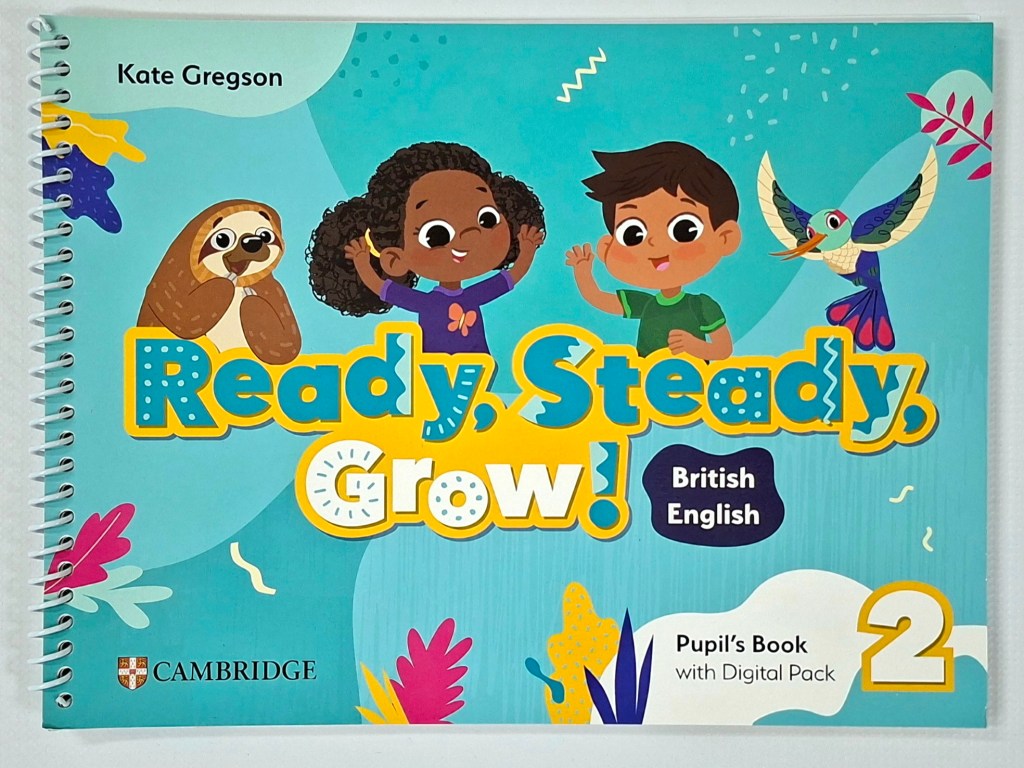
Course Overview
Ready, Steady, Grow! is a three-level pre-primary English course from Cambridge designed for children aged 3–6. It helps young learners build a foundation in English while also developing the social skills and confidence they need for a smooth start to school.
The course uses stories, songs, movement, and simple tasks to introduce language in a natural, enjoyable way. Lessons follow clear routines so teachers and children know what to expect and can focus on learning.
Who This Course Is For
Age Group and Level
- Age range: 3–6 years
- Level: Pre-A1 / A0- (complete beginners)
Teaching Contexts
Ready, Steady, Grow! works well in:
- Kindergartens and nurseries
- Pre-primary English programs
- Language schools with early-years classes
- Mixed-ability groups where children learn at different speeds
The course can be taught with one to three lessons per week, depending on your timetable.
Course Components
This course offers a full set of materials to support both teachers and young learners.
For Learners
- Pupil’s Book with stories, songs, and activities
- Activity Book for extra practice and fine motor skills
- Letters and Numbers materials to support early literacy and numeracy
- Big Book for shared reading of course stories
- Digital practice and games for home and class use
For Teachers
- Teacher’s Book with Digital Pack
- Presentation tools for classroom display
- Extra worksheets and review activities
- Ideas for mixed-ability support and extension tasks
These resources are designed to reduce preparation time and give teachers a clear structure for each lesson.
Teaching Approach
Story-Led Lessons
Learners follow best friends Sofia and Daniel, along with Hug the sloth and Hummy the hummingbird, through familiar situations at home, in class, and outdoors. Stories make new language meaningful and memorable.
Music, Movement, and Play
Songs, chants, and movement activities are used to:
- Introduce and recycle vocabulary
- Support classroom routines
- Keep children active and engaged
This approach is especially helpful for young learners who learn best by doing.
Early Phonics and Literacy Readiness
The course introduces sounds, letters, and numbers in small, manageable steps, preparing children for later reading and writing.
Social and Emotional Development
Wellbeing lessons and classroom routines help children:
- Build resilience
- Work with others
- Manage simple responsibilities
- Gain confidence in a group setting
Classroom Benefits
Clear, Repeatable Routines
Each unit follows a familiar pattern, making it easier for teachers to plan and for children to feel secure.
Support for Mixed-Ability Groups
Ready, Steady, Grow! includes ideas for support and extension so you can adapt activities to different learning needs.
Smooth Transition to Primary Courses
The course prepares children to move confidently into primary ELT series by developing core vocabulary, classroom language, and basic communication.
How We Can Support Your School
If you’re considering Ready, Steady, Grow! for your kindergarten or pre-primary program, we can help you:
- Select the right level and components
- Plan how to integrate the course into your curriculum
- Connect this course with your future primary ELT pathway
- Provide training sessions for your teachers
Related Kindergarten ELT Resources
If you’re exploring options for ages 3–6, you may also want to look at:
- Other pre-primary courses in our Kindergarten ELT Books catalogue
- Phonics and skills support materials for early learners
- Storybooks and readers for shared reading time
[Internal link placeholder: View all Kindergarten ELT books]
Connected Guides and Events
To support teachers using Ready, Steady, Grow!, we also recommend:
- 2025 Teaching Guide: Pre-primary and early-years English
- Upcoming teacher events and workshops
These pages can help teachers explore methods, classroom routines, and practical ideas for teaching very young learners.
Frequently Asked Questions
Is Ready, Steady, Grow! suitable for complete beginners?
Yes. The course is designed for children with no previous experience of English. It introduces language slowly through stories, songs, and simple classroom routines.
How many hours of teaching does the course provide?
Across the three levels, Ready, Steady, Grow! offers roughly 100–200 hours of teaching time, depending on how many lessons you teach per week and how you use the extra materials.
Can I use this course in mixed-ability classes?
Yes. The Teacher’s Book includes support and extra activities so you can adjust tasks for different learning speeds and needs.
Does the course include digital support?
Yes. The Digital Pack and presentation tools provide videos, games, and interactive resources to use in class and for home practice.
How does this course help with school readiness?
The course includes wellbeing lessons and activities that focus on social and emotional development, routines, and simple responsibilities, helping children feel more prepared for school.
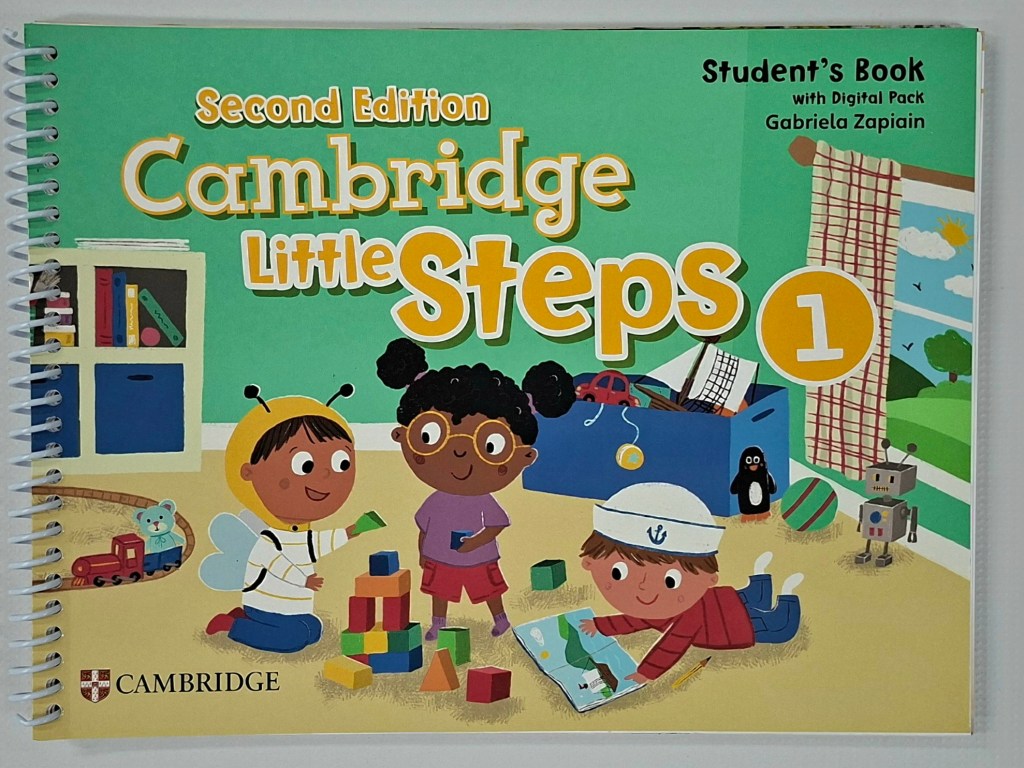
Course Overview
Cambridge Little Steps 2nd Edition is a complete early-years English course designed for very young learners (ages 3–6). It combines stories, big questions, creative play, phonics, and early-literacy activities to build language, thinking skills, and social awareness in a gentle, child-friendly way.
This course is ideal for kindergartens, nurseries, and pre-school programs looking to give children a strong foundation in English — before they begin formal schooling.
Who This Course Is For
Age Group and Level
- Age: 3 to 6 years old
- Level: Pre-A1 (beginner / foundational level English)
Teaching Contexts
Cambridge Little Steps 2nd Edition works well in:
- Kindergartens and nurseries
- Early-years English classes in language schools
- Pre-school or mixed-age classrooms
- Programs aiming at early literacy, social skills, and English exposure
It suits both small group settings and larger classrooms.
What the Course Includes
Learner Materials
- Student’s Book (with stories, songs, vocabulary, Big Questions)
- Activity Book for extra practice (songs, crafts, worksheets)
- Big Book (for shared reading)
- Flashcards, posters, visual aids for vocabulary and classroom routines
- Phonics and numeracy materials (to build early literacy and basic numeracy awareness)
Teacher Support and Digital Resources
- Teacher’s Book with detailed lesson plans and guidance
- Digital Pack (presentation tools, audio, songs, interactive materials) to help bring lessons to life in class and at home
These resources make the course easy to implement and adaptable, even for teachers new to English instruction.
Teaching Approach & Methodology
Story-Based Learning & “Big Questions”
Lessons use stories and thought-provoking questions to help children explore emotions, daily life, relationships, and the world — while building language naturally. This makes learning meaningful and contextual.
Pre-Literacy & Phonics Foundations
Instead of pushing early reading or writing, Little Steps introduces pre-literacy skills — vocabulary, letter/sound awareness, listening, and speaking — laying a solid foundation for later reading.
Creativity, Oracy & Social-Emotional Learning
Through songs, crafts, games, and class routines, children develop communication, collaboration, creativity, and social skills — important for holistic development, not just language.
Flexible & Playful Structure
The course is designed to be playful and flexible, allowing adaptation to different classroom sizes, mixed-ability groups, and varying weekly schedules — which works especially well in early-years contexts.
Why Teachers Choose Little Steps
- Combines English learning with life skills (creativity, cooperation, thinking)
- Engaging and child-appropriate materials that hold young learners’ attention
- Easy-to-use resources for teachers (Teacher’s Book + digital pack)
- Supports mixed-ability and mixed-age groups without overwhelming learners
- Prepares children for primary-level English with a gentle transition
How We Can Support You
If you’re considering Little Steps 2nd Edition for your kindergarten or early-years program, we can help:
- Select the right level and materials pack
- Plan integration into your curriculum
- Provide advice on mixing with other courses (primary ELT, skills books)
- Offer teacher training sessions focusing on early-years methodology
Related Early-Years ELT Books & Resources
You may also want to explore other pre-primary courses and materials in our catalogue, including:
- Story-based readers & flashcards
- Phonics support books
- Songs & songs-based materials
- Primary-level transition books
[Internal link placeholder: View all Kindergarten / Pre-Primary ELT materials]
Connected Guides and Events
To support your implementation of Little Steps, we recommend:
- [Link placeholder: 2025 Teaching Guide – Early Years & Pre-Primary Methods]
- [Link placeholder: Upcoming Teacher Training & Workshops (Events Page)]
These pages help you build a complete English-learning program with methodology, resources, and professional development.
Frequently Asked Questions (FAQ)
Is Little Steps 2nd Edition suitable for children with no English background?
Yes. The course is designed for absolute beginners (pre-A1). It introduces English gently through stories, play, and interactive activities rather than immediate reading or writing.
What makes Little Steps different from other pre-primary courses?
Unlike many early-years courses, Little Steps uses “Big Questions” and values-based stories to build not only language but also thinking skills, social awareness, and creativity. Its balance of pre-literacy, oracy, and play-based learning makes it holistic.
Can I use Little Steps in mixed-age or mixed-ability classes?
Yes. The course’s flexible activities, visual support, and teacher guidance make it well-suited for mixed groups. Extension tasks and differentiated activities are included.
Does the course include digital resources and support?
Yes. Little Steps 2nd Edition includes a digital pack — presentation tools, songs, videos, and resources — which enhances engagement and supports both classroom and home learning.
How does Little Steps prepare children for primary English courses?
By developing listening, speaking, vocabulary, pre-literacy awareness, and social-emotional skills, children are better prepared to transition into structured primary-level English courses later on.
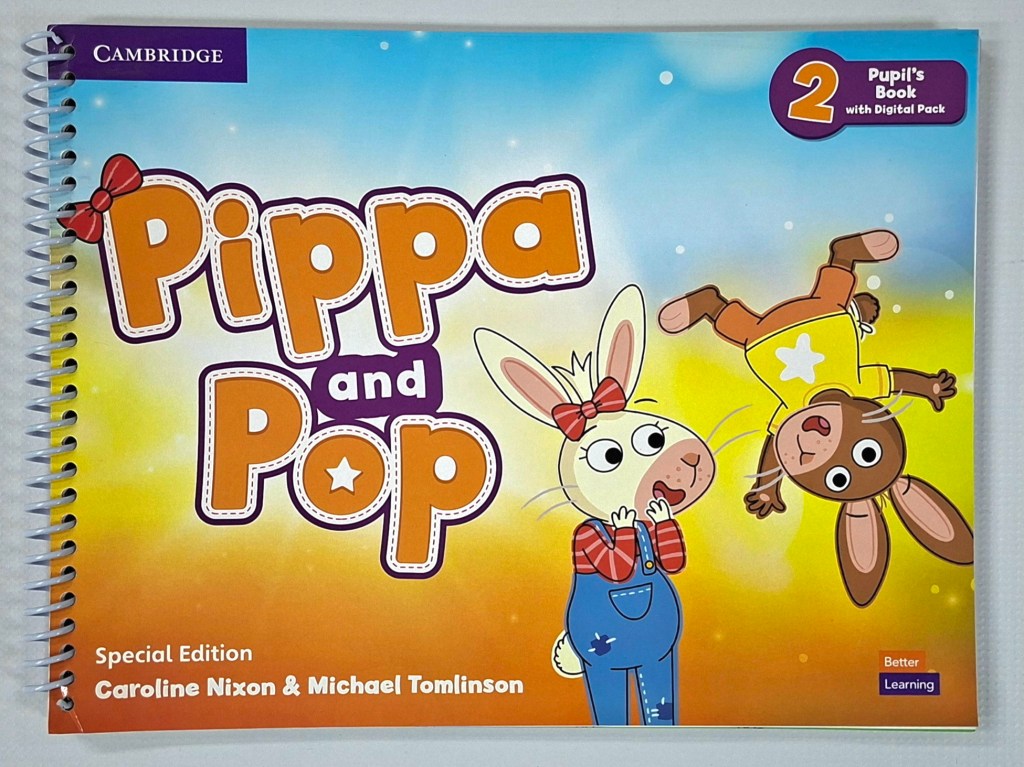
Course Overview
Pippa and Pop is a three-level pre-primary English course that invites young learners into a playful, imaginative world. Through stories, songs, rhymes, and games — centred around friendly characters and a miniature bookshop world — the course helps children build early English language skills while developing creativity, social-emotional awareness, and a love for learning.
The course is designed to stimulate curiosity, support early literacy readiness, and make English meaningful and fun for children aged 3–6. It is ideal for kindergartens, nurseries, or early-years language programs looking for a gentle, engaging start.
Who This Course Is For
Age and Level
- Age: 3–6 years old
- Level: Pre-A1 / Pre-Primary Beginner (for children with little to no previous English exposure)
Teaching Contexts
Suitable for:
- Kindergartens and nurseries
- Private language schools with early-years classes
- Pre-school programs in schools
- Mixed-ability and mixed-age classrooms
Flexible enough for different teaching schedules depending on class size and frequency.
Course Components
Learner Materials
- Pupil’s Book (with stories, songs, rhymes, vocabulary, and activities)
- Activity Book for hands-on practice and playful tasks
- Big Book for shared reading and story time sessions
- Letters & Numbers Workbook (to support early literacy and numeracy readiness)
- Flashcards, posters, visual aids, and classroom resources for vocabulary, routines, and thematic lessons
Teacher & Digital Support
- Teacher’s Book with detailed lesson plans and teaching notes
- Digital Pack (audio, video, interactive resources, presentation tools) to bring lessons to life on screen — ideal for modern classrooms and remote learning integration.
This comprehensive set supports teachers and helps make lessons effective, engaging, and easy to deliver.
Teaching Approach & Methodology
Stories, Songs & Play-Based Learning
Through stories, songs, rhymes and friendly characters, Pippa and Pop turns language learning into a joyful, contextual experience — perfectly suited to young learners’ developmental needs.
Early Literacy & Numeracy Foundations
The course gently introduces letters, sounds, and numbers, building pre-literacy and numeracy readiness in a playful, non-intimidating way.
Creative, Social and Emotional Development
Guided-play activities and values-based lessons help kids build communication, cooperation, creativity, and social awareness — important for holistic development beyond language.
Flexible, Child-Centred Structure
The course adapts to mixed-ability and mixed-age groups. Lessons are flexible, routines are predictable, and materials support different learning styles — making it easier for teachers and more inclusive for learners.
Why Teachers Choose Pippa and Pop
- Engaging, playful content that matches the energy and interests of young learners
- Balanced development of language, literacy, numeracy, creativity and life skills
- Comprehensive teacher support (manuals, digital resources, visuals) for confident, effective delivery
- Adaptable for different classroom sizes, ability levels, and teaching frequencies
- Smooth transition path to primary-level English once children are ready
How We Can Help Your School
If you plan to use Pippa and Pop in your preschool or early-years program, we can support you by:
- Helping select the right level and materials pack
- Advising on lesson planning and class pacing
- Combining this course with other materials (readers, skills books, primary-level series)
- Offering teacher training sessions focused on early-years methodology, play-based learning, and classroom management for young learners
Related Early-Years ELT Resources
Explore other pre-primary and kindergarten English courses in our catalogue, including:
- Other Cambridge pre-primary series
- Flashcards, storybooks, and phonics materials
- Early literacy and numeracy boosters
- Primary transition books
[Internal link placeholder: View all Early-Years ELT Materials]
Connected Guides & Events
To support your implementation of Pippa and Pop — and build a strong early-years English program — we recommend:
- [Link placeholder] 2025 Teaching Guide — Early Years & Pre-Primary Methods
- [Link placeholder] Upcoming Teacher Training Sessions & Workshops (Events)
These resources will help you design a complete curriculum and stay updated with best practices.
Frequently Asked Questions (FAQ)
Is Pippa and Pop suitable for children with zero English background?
Yes. The course is designed for complete beginners (pre-A1). It introduces English gently through play, stories, songs, and repetition — no prior English is needed.
Can this course be used in mixed-ability or mixed-age classes?
Yes. Pippa and Pop offers flexible activities, visual and audio support, and differentiated tasks, making it suitable for groups of different levels and ages.
Does the course include digital and home-learning resources?
Yes. The Digital Pack includes interactive materials, audio, video, presentation tools, and downloadable resources — useful in class and for home practice.
Does it help with early reading and number skills?
Yes. Through stories, letters & sounds, numeracy workbooks, and cross-curricular activities, the course supports early literacy and numeracy readiness in a playful way.
What makes Pippa and Pop different from other pre-primary courses?
Its unique combination of stories, creative play, values & life-competence framework, early literacy/numeracy, and teacher support makes it a holistic course — not just for language, but for early childhood development.
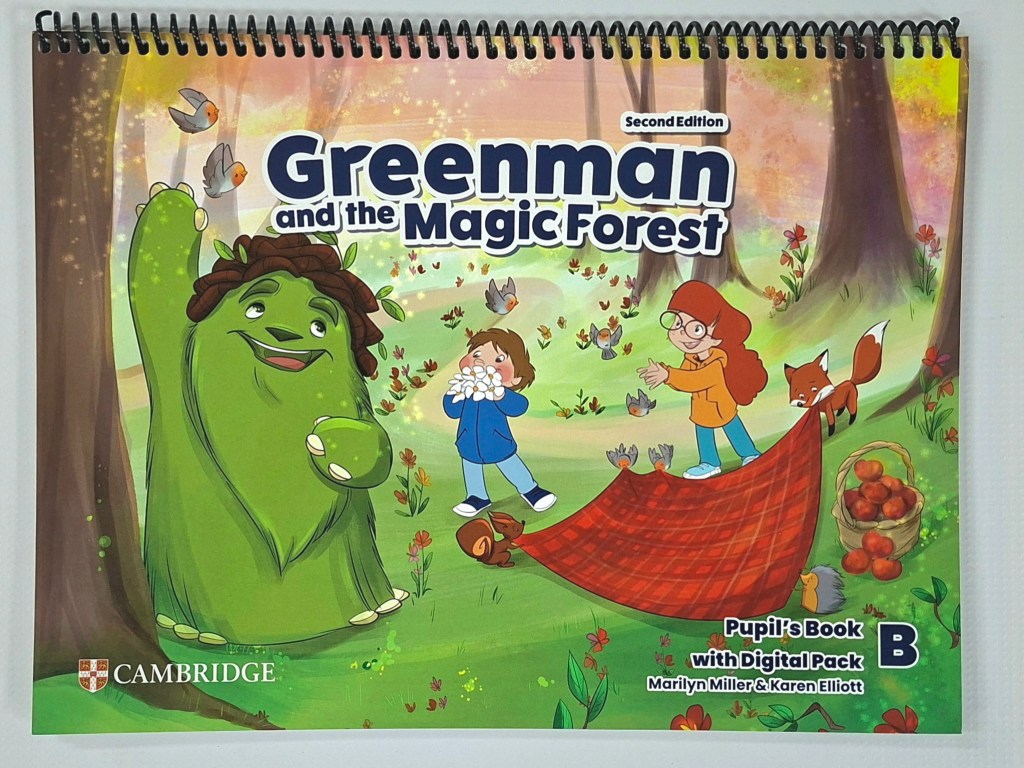
Course Overview
Greenman and the Magic Forest 2nd Edition is a three-level pre-primary English course that nurtures very young learners (ages 3–6). It combines nature-inspired stories, songs, outdoor-theme activities, and gentle routines to make English learning engaging and meaningful.
The course fosters language development alongside curiosity about the environment, social skills, and a caring attitude — ideal for kindergartens, nurseries, and pre-school settings.
Who This Course Is For
Age and Level
- Age range: 3–6 years old
- Level: Pre-A1 / Beginner / Pre-Primary English
Teaching Contexts
Greenman suits a variety of early-years settings:
- Kindergartens and nurseries
- Early-years classes in language schools
- Mixed-ability or mixed-age groups
- Pre-school English programs aiming for gentle introduction and holistic development
It works well with small-group or larger-class environments and flexible scheduling.
Course Components
Learner Materials
- Pupil’s Book (stories, songs, vocabulary, activities)
- Activity / “Forest Fun” Book — for crafts, environmental themes, nature-based tasks, and reflection activities
- Big Book / Story-based materials for shared reading and immersive story time
- Flashcards, posters, visual aids, thematic resources to support vocabulary and classroom routines
- Digital Pack: interactive resources, videos, songs, games — ideal for classroom use and home-learning integration
Teacher & Support Materials
- Teacher’s Book with clear lesson plans, guidance, and activity structure tailored to very young learners
- Digital resources and interactive materials (routine boards, songs, videos, online games) to support teaching and engagement
This comprehensive set makes the course easy to implement and adaptable to different contexts.
Teaching Approach & Methodology
Nature-Inspired, Holistic Learning
Greenman combines language learning with nature themes, environmental awareness, and social-emotional development. Activities are designed to nurture care for nature, collaboration, and empathy.
Story, Songs & Multi-Sensory Learning
Lessons use stories, songs, movement, and interactive tasks — approaches that fit well with the developmental needs of pre-primary learners.
Routine, Repetition & Language Recycling
The course structure emphasizes repeating, recycling, and consolidating language through routines, stories, games, and review units — important for vocabulary retention and phonemic awareness.
Whole-Child Approach & Well-Being Activities
Greenman 2nd Edition doesn’t just teach English — it supports emotional development, social skills, and well-being through reflection, value-based lessons, and creative activities.
Why Greenman and the Magic Forest Is an Excellent Choice
- Designed with very young learners in mind — age-appropriate content and gentle pacing
- Balanced combination of language, social-emotional growth, and environmental awareness
- Rich support for teachers: clear plans, digital resources, flexibility for different class types
- Supports mixed-ability and mixed-age settings, making it versatile for various early-years contexts
- Prepares children for future English learning while nurturing curiosity and love for learning
How We Can Support Your School / Kindergarten
If you choose Greenman and the Magic Forest 2nd Edition for your early-years program, we can provide:
- Advice on selecting the right levels and materials pack
- Guidance on integrating the course into your curriculum
- Planning support to combine Greenman with other courses or materials (songs, readers, primary transition books)
- Teacher training sessions focusing on early-years methodology, environmental themes, and classroom management for young learners
Related Early-Years ELT Resources
You may also like other pre-primary courses and materials in our catalogue, including:
- Flashcards, storybooks, phonics boosters
- Other Cambridge pre-primary series
- Early-literacy and pre-reading skill kits
- Songs, crafts, and activity-based resources
[Internal link placeholder: View all Kindergarten / Pre-Primary ELT Materials]
Connected Guides & Events
To get the most out of Greenman, we recommend exploring:
- 2025 Teaching Guide (Pre-Primary & Early Years Methods)
- Upcoming Teacher Training & Workshops (Events Page)
These add strong pedagogical support and help build a full early-years program for your learners.
Frequently Asked Questions (FAQ)
Is Greenman and the Magic Forest suitable for absolute beginners?
Yes. The course is designed for young learners who are new to English. It introduces language gently through familiar contexts, songs, stories, and nature themes.
Can it work with mixed-ability or mixed-age classes?
Yes. The course offers diverse activities, differentiation options, and flexible pacing, making it suitable for mixed groups of children.
Does the course support non-language skills (social, emotional, environmental)?
Yes. Through themes around nature, values, well-being, and cooperation, the course supports holistic development beyond just language learning.
Is there digital support and home-learning integration?
Yes. The package includes digital resources, online games, songs, videos, and interactive content to reinforce learning inside and outside the classroom.
How does Greenman prepare children for primary-level English courses?
By building strong foundations: vocabulary, phonics awareness, listening and speaking, vocabulary recycling, social skills, and environmental awareness — helping children transition smoothly into more structured primary courses.
 Nour E Sham Book Centre