
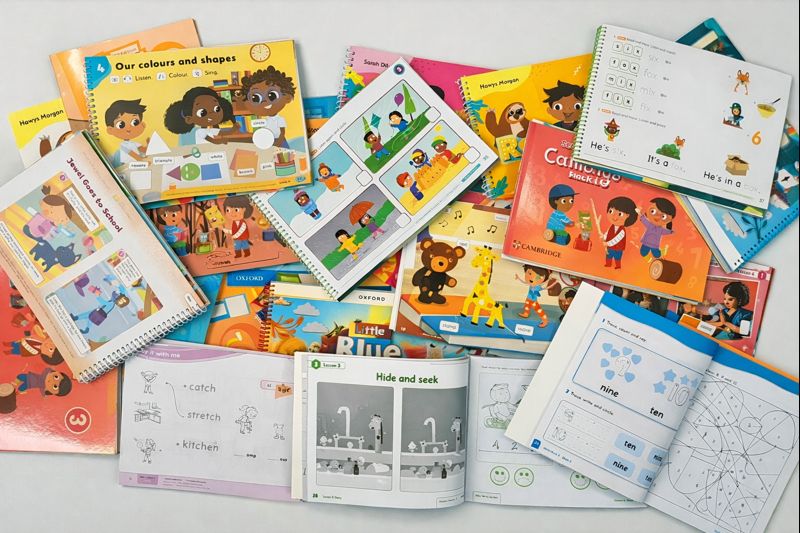
Choosing the right English kindergarten (KG) books is one of the most important decisions a school can make. Many schools and parents search for English kindergarten books, curricula, or even free PDFs without fully understanding what children actually need at this age.
The right KG English books are not about downloading materials or following trends. They are about building strong foundations in language, literacy, thinking skills, and confidence. This guide explains the key criteria schools should consider when selecting English books for kindergarten students.
Language Foundations in English Kindergarten Books
Strong language foundations are the first step in learning English. A good kindergarten English book must introduce language gradually and naturally, helping children feel confident as they begin their learning journey.
Letters
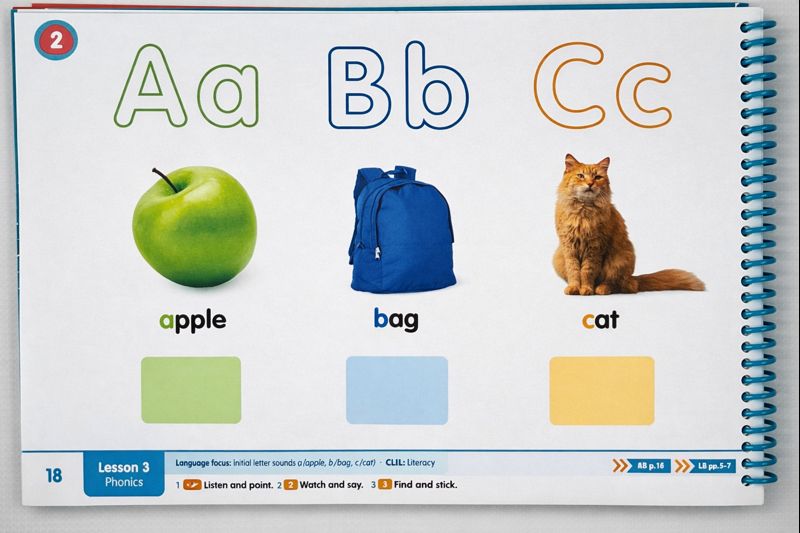
Learning letters is the starting point of language development. Children must recognize the alphabet before they can read or write. Letters are the building blocks of words, and early exposure helps children feel familiar and comfortable with English.
Phonics

Phonics teaches children how letters connect to sounds. This skill makes reading easier and faster over time. For example, understanding that the letter “c” makes the /k/ sound in “cat” helps children decode words instead of memorizing them.
Vocabulary
Vocabulary in kindergarten should be simple, useful, and meaningful. Words should come from the child’s everyday world, such as animals, colors, toys, food, and family. When children recognize words from their own environment, learning becomes enjoyable and relevant.
Simple Conversation and Grammar
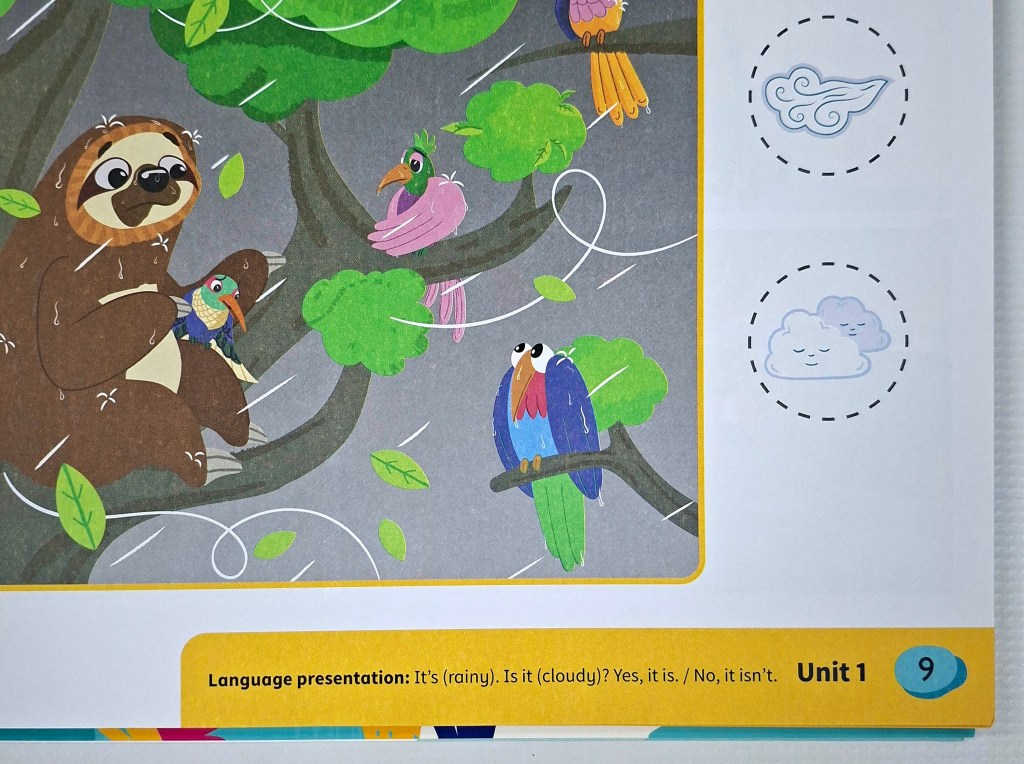
Short sentences like “It is big” or “I like apples” help children start speaking naturally. Through simple conversation, children learn basic grammar structures such as subject + verb, pronouns, and the verb “to be.” This allows them to use vocabulary in real communication, not just memorize words.
Early Literacy and Reading Skills
Reading skills begin long before children read full sentences. Kindergarten English books should prepare children gradually for reading through visual support and structured activities.
Literacy
Literacy includes learning letters, sounds, phonics, and early reading skills. A strong literacy section builds the foundation children need for future academic success in English.
Picture-Based Reading
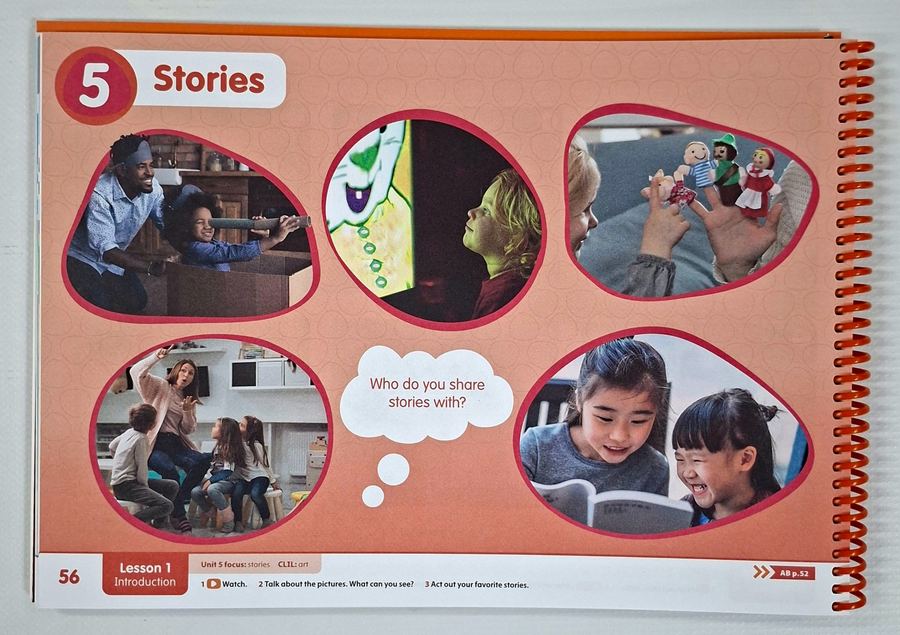
Stories with pictures and very few words help children understand meaning before reading text. Children learn to “read” images first, which develops imagination, comprehension, and confidence.
Story Understanding
Simple stories help children follow sequences, recognize characters, and understand basic ideas. This prepares them for real reading later while keeping learning enjoyable.
Numeracy and Cognitive Development
English learning in kindergarten should not focus only on language. Good materials also support thinking and basic math skills.
Numeracy

Children should learn numbers, counting, and basic quantity concepts. Numeracy supports everyday life skills, such as counting toys, fingers, or objects in the classroom.
Cognitive Skills
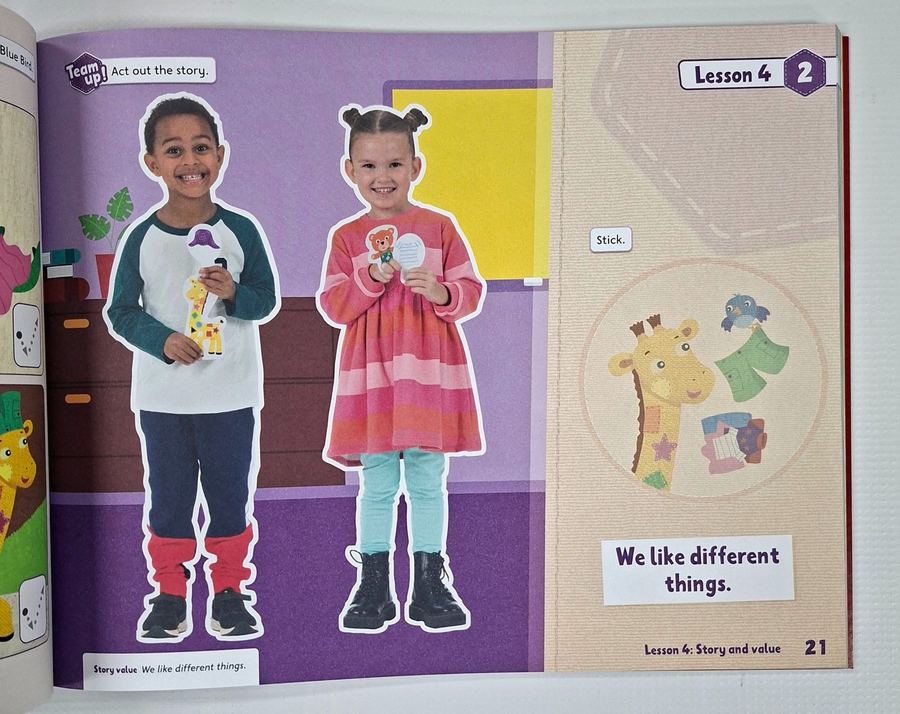
Activities like matching, sorting, puzzles, and problem-solving train children’s thinking skills. When cognitive development grows alongside language learning, children understand and remember English better.
Writing and Fine Motor Skills
Before children can write independently, they need to develop control over their hands and pencils.
Assisted Writing
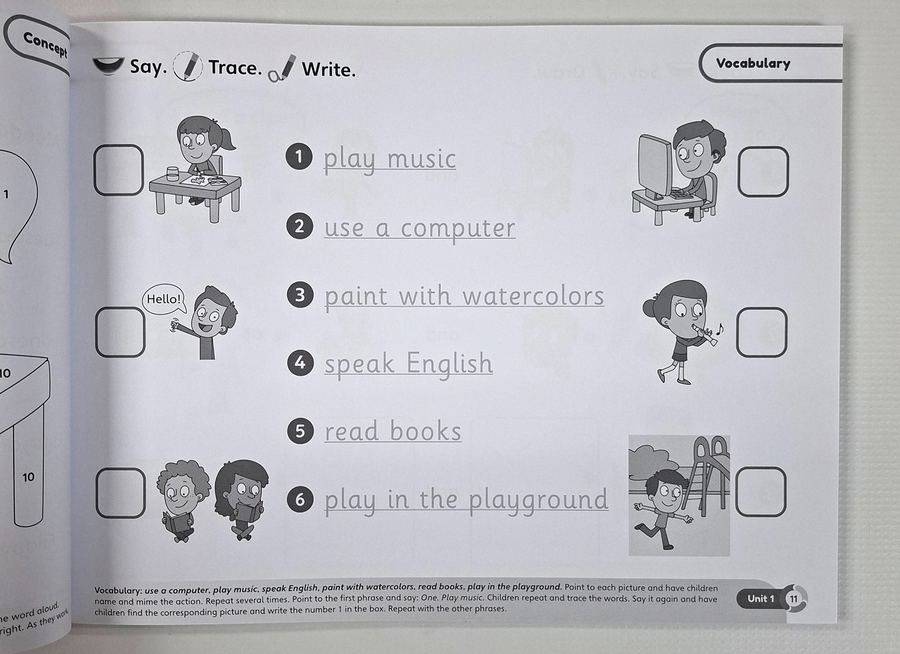
A good book starts with tracing letters by joining dots, then moves to writing between lines, and finally allows children to write freely. This step-by-step approach builds confidence and prevents frustration.
Pencil Activities
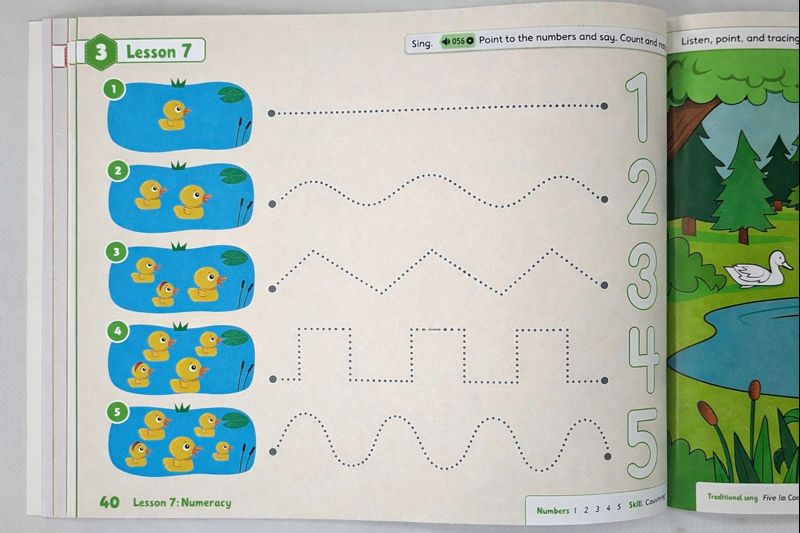
Drawing lines, curves, and shapes helps children control pencils and prepare for writing letters and words. These activities also improve hand–eye coordination.
Coloring

Coloring is relaxing and enjoyable for children. It helps them learn how to hold crayons and pencils correctly while developing fine motor skills and creativity.
Engagement and Motivation for Young Learners
Young children learn best when they are motivated and emotionally engaged. Kindergarten English books should feel fun, not academic or boring.
Colorful Pictures
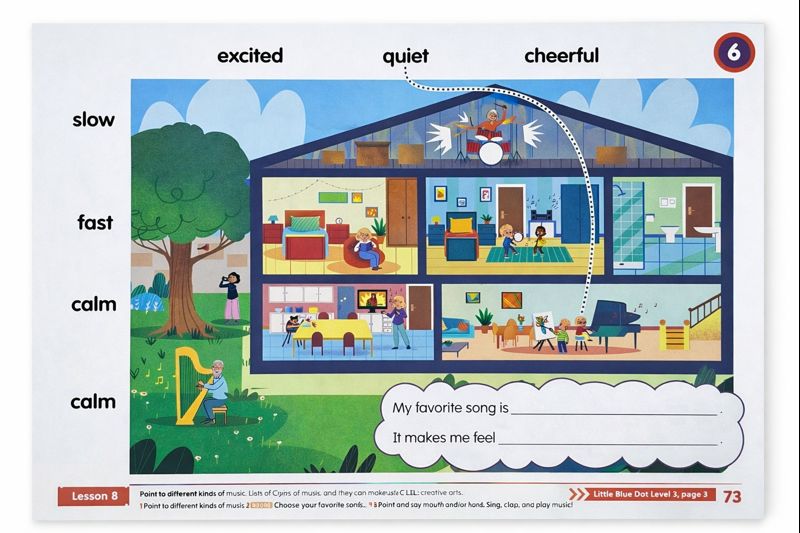
Bright, clear pictures attract children’s attention and make them excited to turn pages. Visuals help children understand meaning and stay focused during lessons.
Stickers
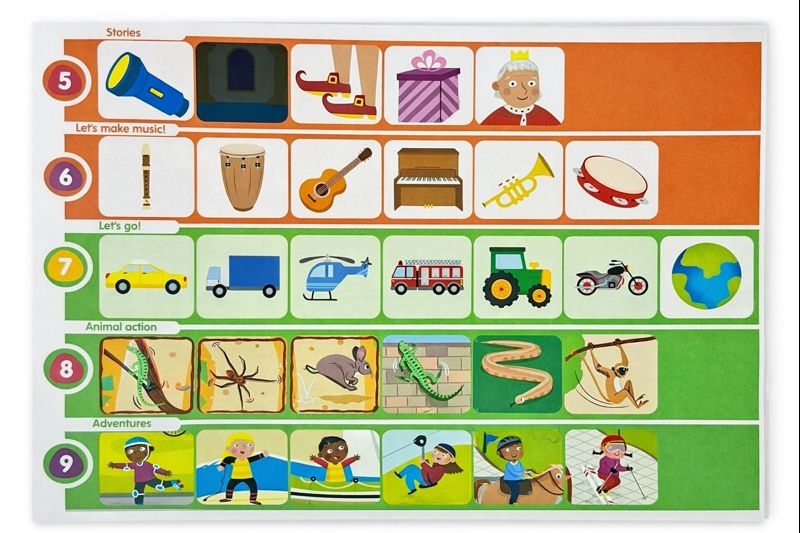
Stickers motivate children and reward effort. Searching, peeling, and sticking also develops focus and fine motor skills, making learning interactive and enjoyable.
Puppets

Puppets encourage shy children to speak and participate. A puppet character makes lessons playful and creates an emotional connection with the book.
Big Books
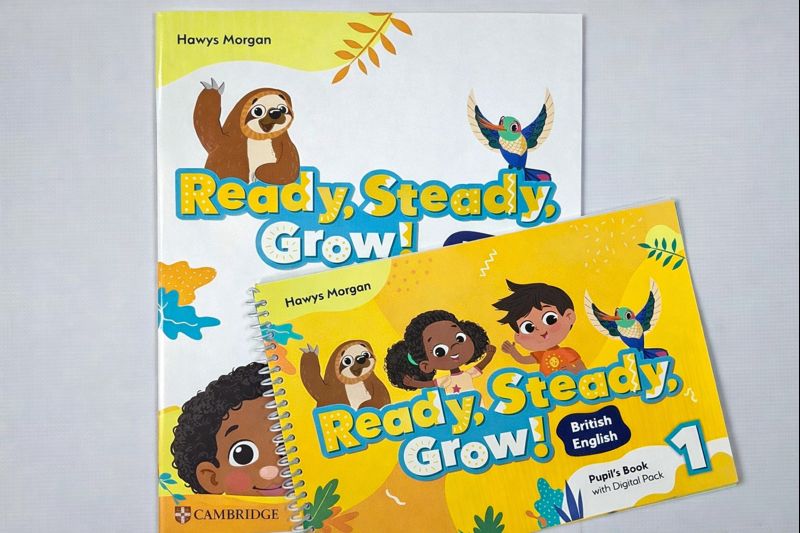
Big books are designed for classroom storytelling. With large pictures and clear text, teachers can engage the whole group, making lessons interactive and memorable.
Listening, Songs, and Oral Language
Listening is the main way children receive language input at an early age. Strong listening activities are essential in KG English books.
Listening Activities
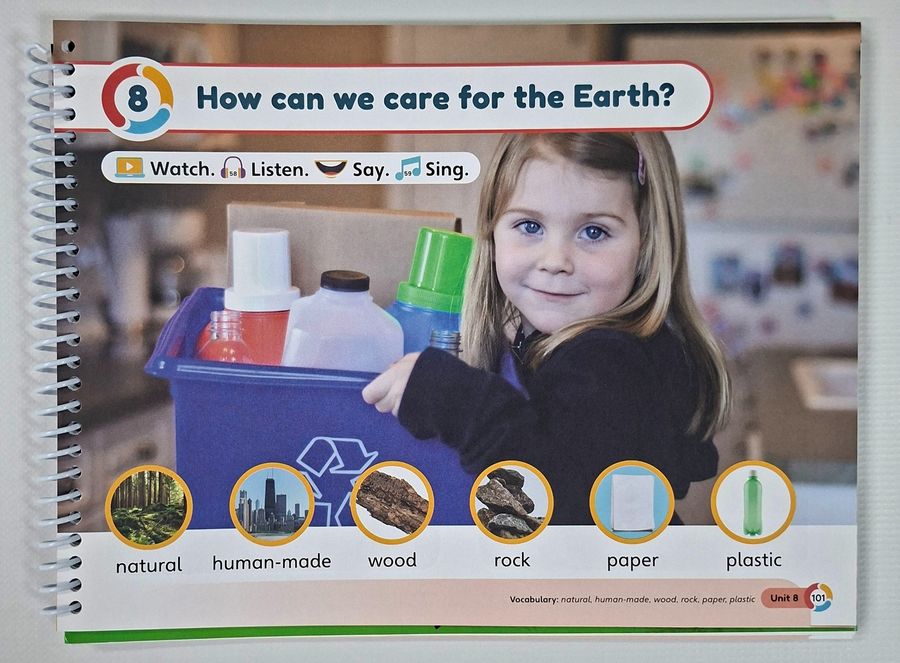
Listening exercises such as circling the correct answer or pointing to pictures help children associate sounds with meaning.
Songs and Chants
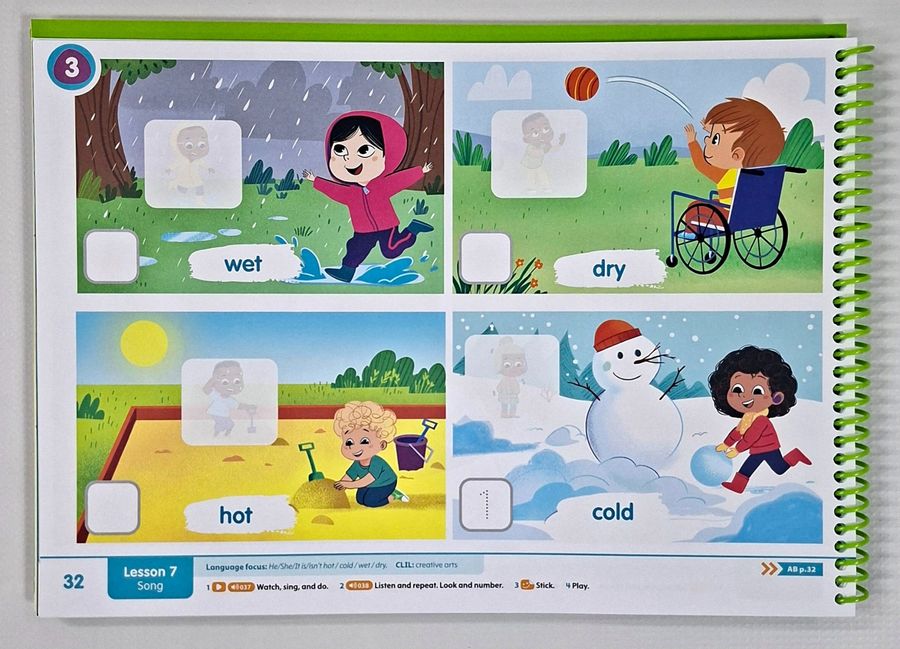
Music and repetition improve pronunciation and memory. Songs and chants make English enjoyable and help children remember language naturally.
Games and Acting

Simple games like “Simon Says,” matching cards, and role play keep children active. Acting and movement help children learn English through experience, not memorization.
Values and Integrated Learning (CLIL)
English kindergarten books should also support children’s social and emotional development.
Values
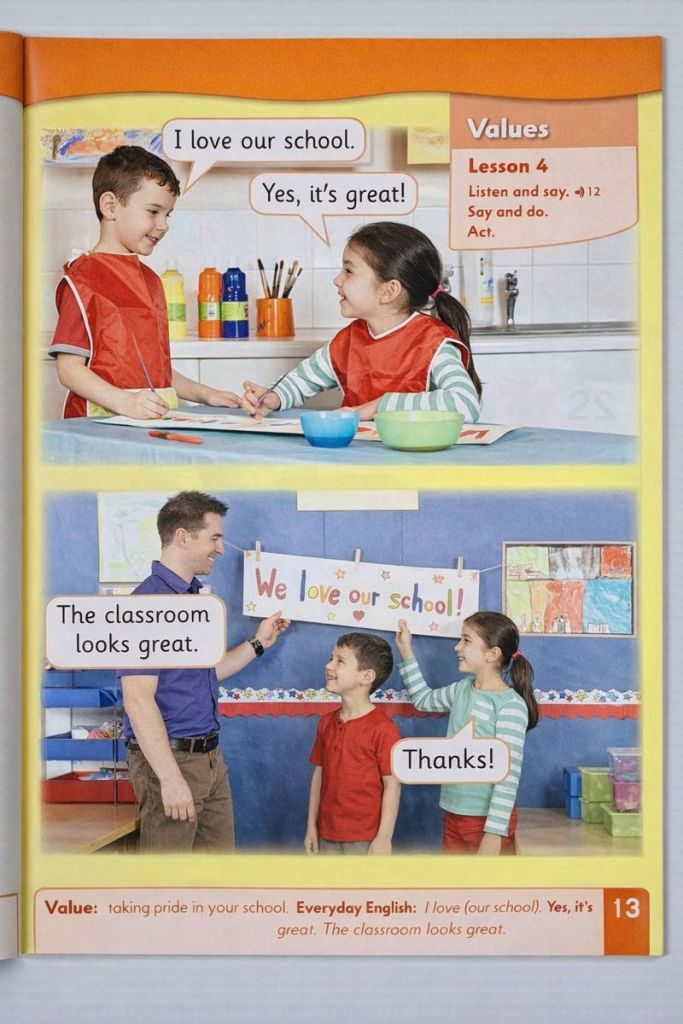
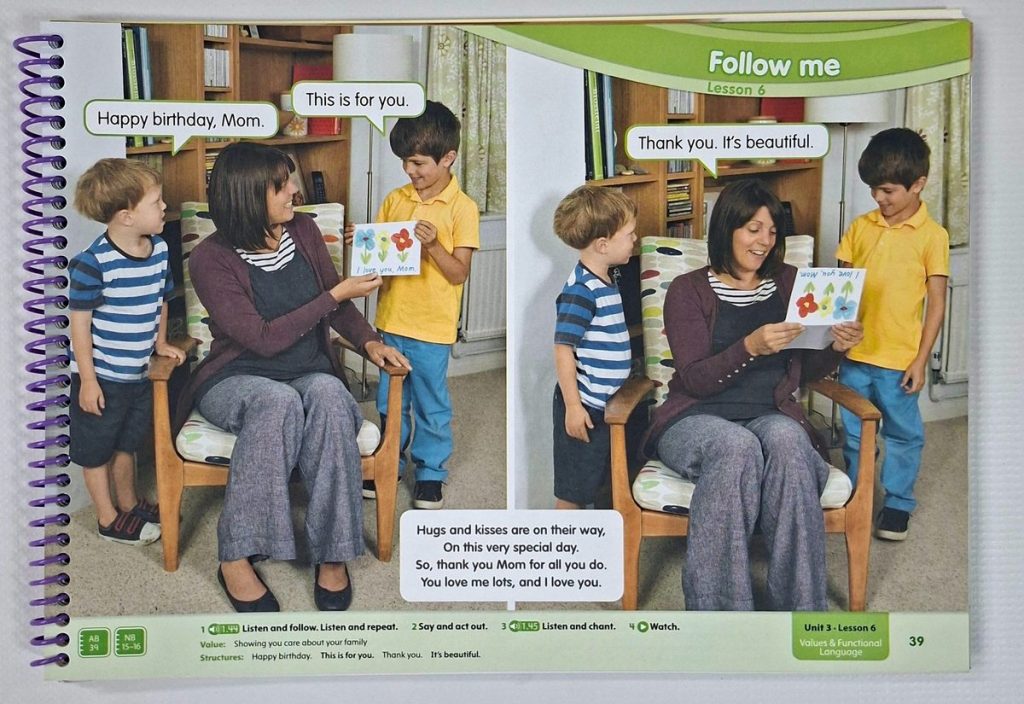
Books should teach kindness, sharing, cooperation, and polite language. Expressions like “please,” “thank you,” and “can I play?” help children communicate respectfully.
CLIL (Content and Language Integrated Learning)
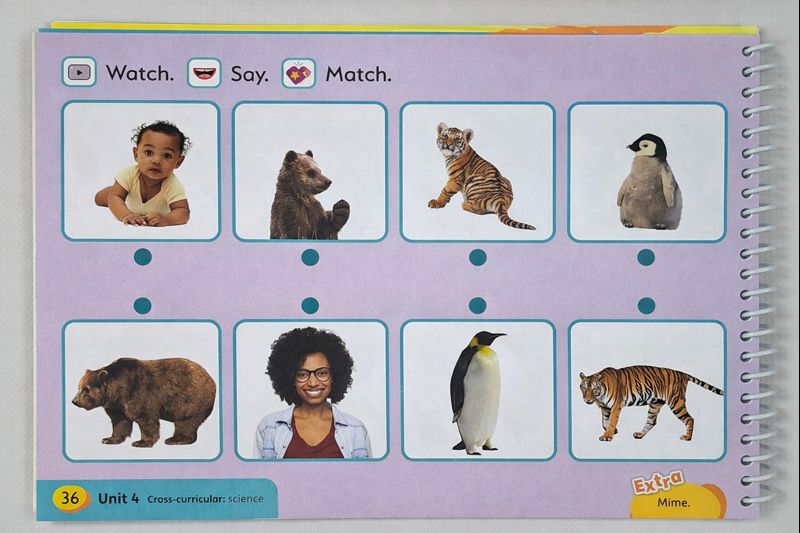
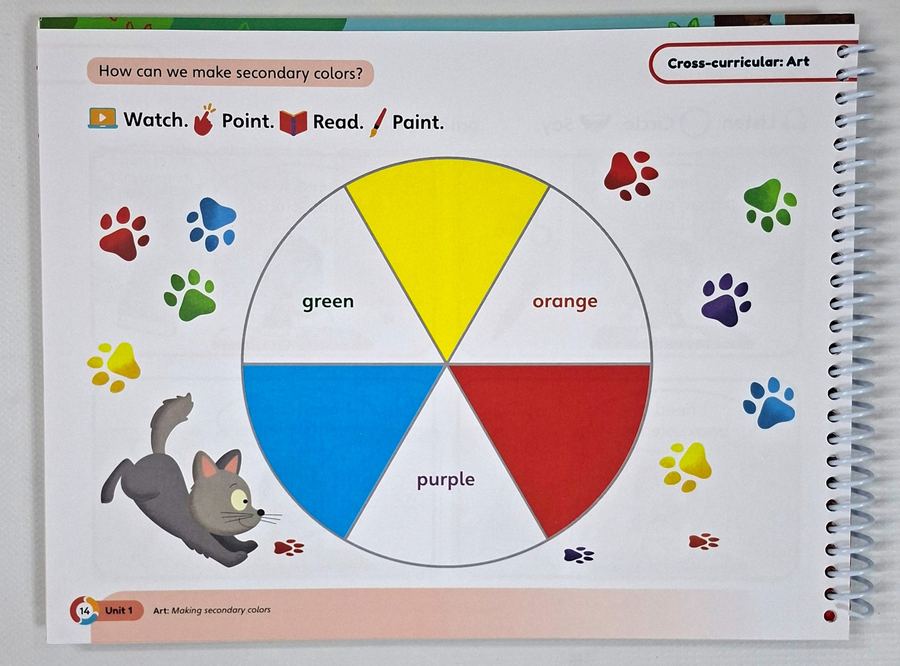
CLIL introduces basic concepts from math, science, or social studies through English. For example, learning colors while studying plants helps children gain knowledge and language at the same time.
Cultural Sensitivity
Pictures and stories should respect children’s culture and background. Familiar and appropriate content helps children feel safe and connected to learning.
Common Mistakes When Choosing KG English Books
Many schools make avoidable mistakes when selecting kindergarten English materials, such as:
- Choosing books without a clear phonics program
- Depending only on free PDFs without structure or guidance
- Ignoring teacher support and training materials
- Using books not designed for the child’s age or developmental stage
Avoiding these mistakes helps schools build strong English foundations from the very beginning.
 Nour E Sham Book Centre